The Errand Economy: Why Daily-Use Retail May Be Kettlestone’s Strongest Long-Term Asset
Commercial real estate often focuses on big announcements: destination restaurants, hotels, entertainment venues, and flagship retail. Those uses matter. They create excitement and visibility.
But long-term commercial value is often built by something quieter and more consistent:
The errand economy.
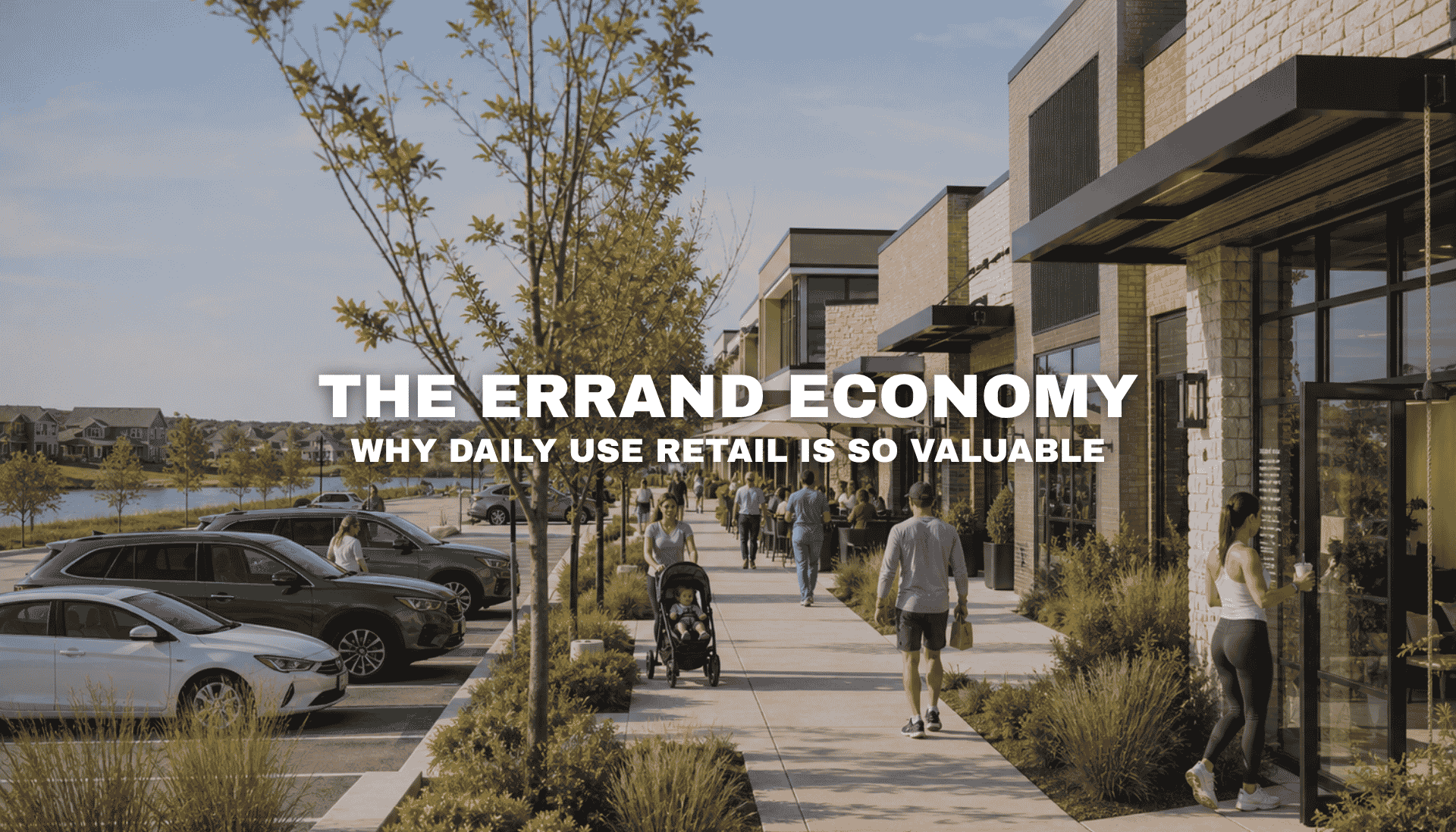
Daily-use retail — coffee, fuel, groceries, medical appointments, fitness, personal services, and quick-service dining — creates the repeat traffic that sustains a district year after year. At Kettlestone Lakes, this category may become one of the development’s strongest long-term assets.
Kettlestone’s site positions the development for retail, dining, hospitality, office, entertainment, multifamily, and more, with visibility from I-80 and placement along Grand Prairie Parkway. Nearby tenants listed in Kettlestone’s location content include Starbucks, Raising Cane’s, Hy-Vee Fast & Fresh, The Iowa Clinic, and Casey’s — a mix strongly aligned with repeat, errand-based traffic.
That mix is important because errands are not occasional. They are habitual.
Why Daily-Use Retail Is So Valuable
Destination uses depend on planned visits. Daily-use retail depends on routine.
That routine creates:
- Predictable traffic
- Repeat customer behavior
- Strong brand familiarity
- Cross-shopping opportunities
- Consistent weekday demand
A customer may not visit an entertainment venue every week. But they may buy coffee several times a week. They may stop for fuel, grab lunch, visit a clinic, or pick up groceries regularly.
Those repeated touchpoints create the foundation for a healthy commercial district.
The Types of Tenants That Power the Errand Economy
Daily-use retail is broader than convenience stores. It includes a wide range of practical, service-driven categories:
- Coffee shops
- Quick-service restaurants
- Dental and medical offices
- Hair salons and barbershops
- Nail salons and medspas
- Dry cleaners
- Pet services
- Fitness studios
- Banks and credit unions
- Pharmacy and health services
- Childcare and tutoring
- Grocery and specialty food
These tenants may not always generate the biggest headlines, but they generate consistent visits.
For Kettlestone, that consistency is critical.
Why Waukee Is Built for This Category
Waukee’s growth is driven by households. Households create errands.
As new families and professionals move into the area, they need convenient places to handle daily life. They do not want every service trip to require a drive into West Des Moines or deeper into the metro.
They want nearby options that fit into their routines:
- Before school
- During lunch
- After work
- Between activities
- On weekends
Kettlestone’s location along Grand Prairie Parkway positions it directly within those movement patterns.
The Advantage of Repeat Exposure
For retailers, repeat exposure can be more valuable than occasional high-volume traffic. A resident who passes the same business several times a week becomes familiar with the brand even before becoming a customer.
That familiarity increases conversion.
A new medspa becomes familiar. A fitness studio becomes part of someone’s commute. A lunch spot becomes a default option. A dental office becomes the first place someone calls when they need care.
Kettlestone’s surrounding tenant mix already supports this pattern. Coffee, quick-service dining, fuel, healthcare, and convenience are all categories that build familiarity through repetition.
Why Daily-Use Retail Supports Other Uses
The errand economy does not exist in isolation. It supports larger commercial goals.
For office users, daily-use amenities make the workplace more attractive. Employees want lunch, coffee, fitness, and services nearby.
For hotels, daily-use retail improves guest convenience. Travelers appreciate nearby food, fuel, health services, and shopping.
For multifamily residents, daily-use retail enhances livability. The more errands people can complete nearby, the more desirable the neighborhood becomes.
For restaurants and entertainment, daily-use traffic creates awareness that can convert into evening visits.
This is the power of mixed-use commercial layering.
Smaller Tenants, Bigger Impact
Daily-use tenants often require smaller footprints than big-box anchors or large entertainment venues. That makes them ideal for incremental development.
A 2,000-square-foot salon, a 4,000-square-foot dental office, or a 6,000-square-foot fitness studio can add significant activity to a district without requiring massive land allocation.
For developers, these tenants create:
- Diversified rent rolls
- Lower vacancy risk
- Flexible building formats
- Stronger everyday traffic
Kettlestone’s parcel flexibility supports this type of tenant mix.
The Role of Medical and Wellness
Healthcare and wellness are especially important within the errand economy because they combine necessity with repeat visits.
A physical therapy patient may visit several times per week. A fitness member may come daily. A dental or orthodontic patient returns regularly. A medspa client may schedule recurring treatments.
These uses create predictable patterns that strengthen surrounding businesses.
This makes Kettlestone especially attractive for wellness-oriented tenants that want visibility, accessibility, and proximity to growing residential demand.
From Convenience to Community
The best daily-use retail does more than serve errands. It creates familiarity and community.
The same barista sees the same customers. Families visit the same restaurant after practice. Patients return to the same clinic. Residents begin to associate the district with their routines.
Over time, this builds loyalty.
That loyalty is harder to create in a purely destination-driven district. It comes from repetition.
Kettlestone has the ingredients to become that kind of everyday place.
Why Developers Should Prioritize Daily Uses
For developers, daily-use retail may not always sound as exciting as entertainment or hospitality. But it often makes the entire project more bankable.
Lenders and investors like consistent traffic. Tenants like strong co-tenancy. Residents like convenience. Office users like amenities.
Daily-use retail strengthens all of those.
It is the connective tissue of a mixed-use district.
The Future Is in the Routine
Kettlestone Lakes has the visibility, access, and growth narrative to attract major users. But its long-term success may be defined just as much by the everyday businesses that make people return.
Coffee. Clinics. Fitness. Food. Services. Errands.
These are the habits that turn a commercial project into a community destination.
The errand economy is not small. It is foundational.
And at Kettlestone Lakes, that foundation is already forming.