Food Halls Are Winning in the Suburbs Now
Food halls spent a decade as a big-city story, and now the growth is moving to the suburbs. That shift is the strongest argument yet for a food hall Waukee Iowa diners can call their own, in a fast-growing suburb that has the rooftops, the incomes, and the traffic to fill one. Kettlestone Lakes, at the northwest corner of Interstate 80 and Grand Prairie Parkway, offers the lakeside setting and the daily volume the format needs.
The segment is expanding quickly. A 2026 industry report counted 458 operating food halls across the country, up almost 25 percent over two years, with 114 more in the development pipeline. What stands out is where the new ones are going. Of the next wave of openings, the clear majority are landing in suburban and peripheral markets rather than downtown cores.
Why a food hall Waukee Iowa location matches the suburban shift
The reason developers are chasing suburbs is simple. That is where the households, the growth, and the daytime and evening demand now sit. Of 18 food halls opening within roughly six months of the report, 15 were in suburban or peripheral locations, and for 2026 projects the suburban share held around 70 of 96. A food hall Waukee Iowa families can reach without driving downtown is exactly the model the industry is betting on.
Waukee supplies the demand side. The city has grown roughly 32 percent in four years toward a projected 50,000 residents by 2040, with a median household income near 101,000 dollars and a median age around 35. Young families and professionals with money to spend on eating out are the core food hall audience, and Waukee has them in growing numbers.
Leaner formats fit a development pad
Today’s food halls are also easier to place than the sprawling versions of a few years ago. The newest openings average about eight vendors and 19,000 square feet, leaning on tighter footprints and focused beverage programs rather than 40 stalls and vast square footage. That leaner box fits neatly into a planned commercial development.
A food hall Waukee Iowa operators build at Kettlestone Lakes can be sized to the market rather than forced into an oversized shell. With retail parcels planned for a range of tenants and an ownership group experienced in build-to-suit delivery, the format can be tailored to eight to twelve strong local concepts and a central bar, the configuration performing best right now.
The lake, the dwell time, and the traffic
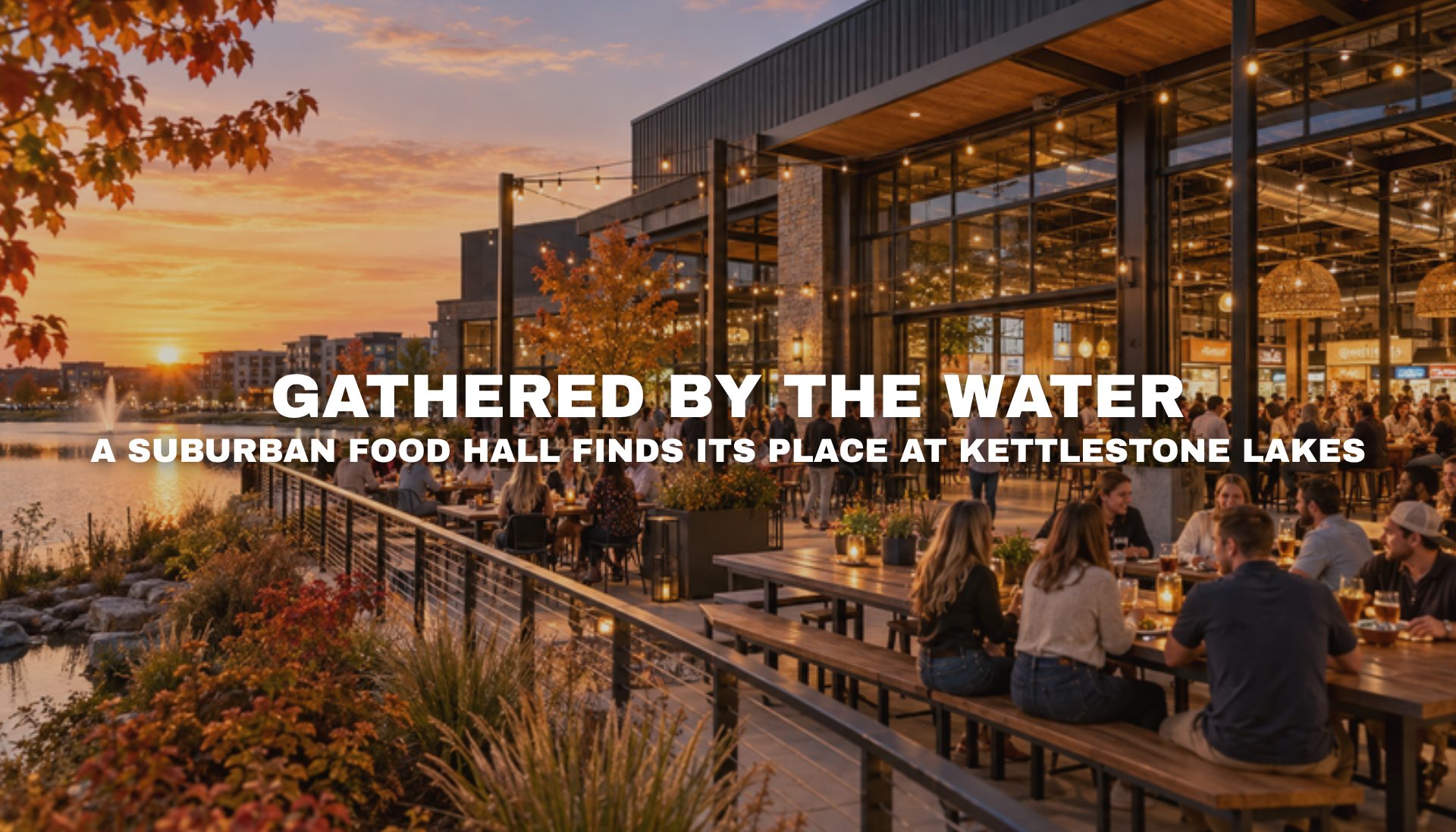
Food halls win on atmosphere and dwell time, and Kettlestone Lakes was designed with both in mind. The development is built around water features and lakeside gathering space, the kind of setting that turns a quick meal into a lingering visit. A food hall Waukee Iowa residents can walk to a patio overlooking the water has an edge that a strip-center restaurant cannot match.
Traffic seals the case. Interstate 80 carries roughly 40,350 vehicles per day past Exit 118, and Grand Prairie Parkway funnels local traffic to the site. A food hall Waukee Iowa visitors reach off the interstate draws both the neighborhood regular and the traveler looking for a better option than a drive-through, widening the customer base beyond the immediate rooftops.
The asset case matters to owners too. Real estate advisors note that a well-run food hall raises the value of the property around it by driving foot traffic, extending dwell time, and giving a center an identity. A food hall Waukee Iowa anchor does not just pay its own rent, it makes the neighboring pads more valuable.
How Kettlestone fits a food hall operator’s needs
Run through what a food hall operator wants and Kettlestone Lakes delivers. A dense, growing, affluent trade area, a distinctive lakeside setting for dwell time, strong interstate and parkway traffic, a pad that can be sized to a lean modern format, and surrounding retail that keeps the site busy across dayparts. A food hall Waukee Iowa location here fits the suburban model the industry is expanding into.
There is a local-flavor angle as well. Food halls give regional chefs and first-time operators a lower-risk way to launch, which means a Kettlestone hall can showcase Des Moines-area concepts rather than only national chains. That local identity is what makes a hall a destination instead of a food court, and destinations pull traffic from well beyond their own zip code.
For an operator or developer looking at the Des Moines metro, the case for a food hall Waukee Iowa location at Kettlestone Lakes lines up with where the whole segment is heading, into growing suburbs with strong demographics and a real sense of place. Learn more on the about the development page, or start a conversation through the contact the leasing team section.
Frequently asked questions
Are food halls still growing in 2026?
Yes. A 2026 report counted 458 operating US food halls, up nearly 25 percent over two years, with 114 more in the pipeline and most new projects opening in suburban markets. A food hall Waukee Iowa location fits that trend.
Why are food halls moving to the suburbs?
Suburbs hold the growing households, incomes, and demand. Of 18 near-term openings, 15 were suburban or peripheral, and for 2026 projects roughly 70 of 96 are outside urban cores, matching a market like Waukee.
How big is a modern food hall?
The newest food halls average about eight vendors and 19,000 square feet, a leaner footprint than earlier versions, which makes them easier to fit into a planned commercial development like Kettlestone Lakes.
What makes Kettlestone Lakes a good setting?
The development is built around lakeside gathering space that encourages dwell time, sits on I-80 with about 40,350 vehicles per day, and offers surrounding retail that keeps traffic steady across the day and evening.
Who do I contact about a food hall site at Kettlestone Lakes?
The Kettlestone Lakes leasing team handles dining and build-to-suit inquiries. Reach them through the contact section of kettlestonelakes.com to discuss a food hall Waukee Iowa location.
Sources: Hospitality Net, Colicchio Consulting 2026 Food Hall Report and CBRE, Food Halls Are Enhancing Asset Value.