Waterfront Commercial Real Estate Iowa: 6 Critical Ways a Lake Setting Drives Proven Business Results
Waterfront commercial real estate in Iowa is genuinely rare, and that rarity has a measurable impact on the businesses lucky enough to occupy it.
Most suburban commercial developments in the Midwest are defined by what they are near: a highway interchange, a retail corridor, a residential neighborhood. Location is the asset. The setting is just a parking lot and a storefront.
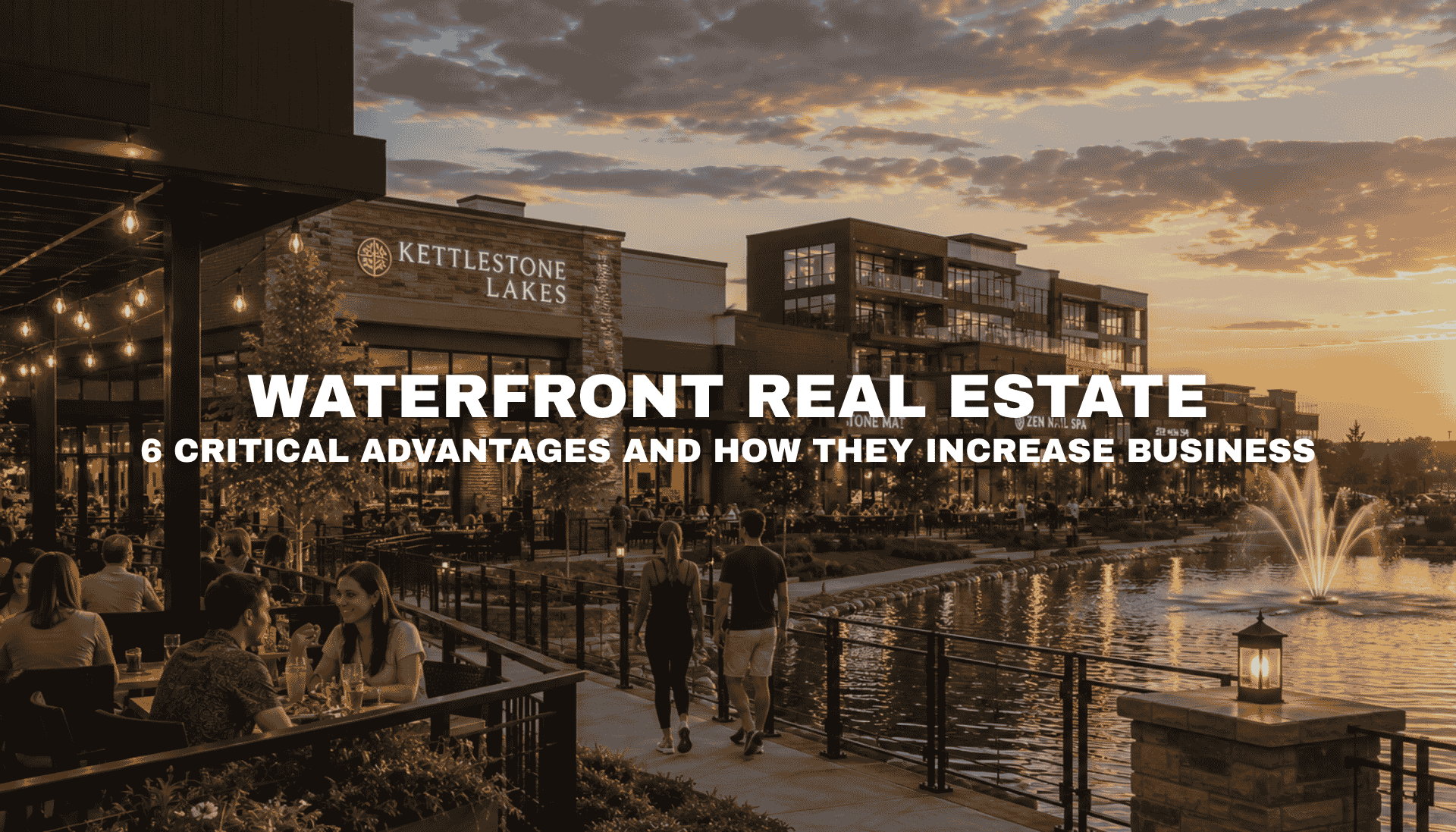
Kettlestone Lakes is different. Not only because of where it sits, at the northwest corner of Interstate 80 and Grand Prairie Parkway in Waukee, but because of what it is built around: up to nine acres of lakes at the heart of a 130-acre master-planned mixed-use district. Water is not a backdrop at Kettlestone. It is a structural component of the development, and it changes the business case for every parcel within it.
This article is about that business case. Specifically, what science, consumer behavior research, and real commercial performance data say about how a waterfront or water-adjacent setting changes outcomes for the businesses operating within it.
Why Waterfront Commercial Real Estate Iowa Is a Distinct Category
Before examining the specific advantages, it helps to understand why waterfront commercial settings perform differently from their landlocked equivalents.
The answer lies in a well-documented concept called biophilia, the human tendency to seek connection with natural environments. Research into how people respond to natural elements, including water, green space, natural light, and open views, has been applied extensively to residential real estate for decades. The premium buyers pay for a water view is well established. Property buyers are willing to pay 58 percent more for properties that look at water, and 127 percent more for those that are directly waterfront. Wikipedia
What has taken longer to translate fully into commercial real estate strategy is that the same psychological response applies to customers, not just homebuyers. People feel differently in environments where natural elements are present. They behave differently. They spend differently. They stay longer and return more often.
For a business operator evaluating where to put their next location, that behavioral shift is not a soft consideration. It shows up in revenue.
Advantage 1: Customers Stay Longer, and Longer Stays Mean More Spending
The relationship between environment and dwell time is one of the most consistently documented findings in retail and hospitality research.
A study of commercial lobbies in New York City found a 36 percent increase in the number of active and passive users in spaces with strong biophilic design elements compared to conventionally designed spaces, and researchers noted that increasing dwell time in retail and food and beverage settings directly increases the likelihood of purchase. rd+d
The effect is not subtle. Research examining cafes that integrated natural design elements found customers staying 46 percent longer and spending 32 percent more per visit than in comparable venues without those features. Coffee On Cue
For businesses at Kettlestone Lakes, the lakes themselves are the most powerful natural element in the environment. A customer sitting at an outdoor table with a lake view is not checking the time. They are settled, comfortable, and relaxed in a way that a customer in a generic strip center simply is not. That emotional state translates directly into longer visits, additional orders, and a stronger overall perception of value.
This applies beyond restaurants. Office tenants report higher employee satisfaction and lower turnover in water-adjacent environments. Retail visitors linger in developments that feel pleasant rather than purely functional. Personal care clients return more consistently to studios and spas that feel like a retreat rather than just a service stop.
The lake at Kettlestone does that work for every business in the development, not just the ones with direct water frontage.
Advantage 2: Outdoor Dining Economics Are Fundamentally Better Near Water
Outdoor dining has moved well past being a seasonal perk. More than half of Americans say they prefer to dine outdoors when the weather is nice, and nearly two-thirds of Gen Z specifically prefer rooftop bars and elevated spaces with views when choosing where to eat. OpenTable
For a restaurant, the business case for outdoor seating with a view is straightforward:
- Outdoor seats often generate higher average checks because the experience feels elevated
- Patio space is typically lower cost per square foot than interior dining room buildout
- Outdoor settings create distinct revenue streams through private event rentals
- Water views produce organic social media content from guests, extending marketing reach without additional spend
- Seasonal patio programming, live music, themed evenings, and community events, drives incremental weeknight traffic that landlocked competitors cannot easily replicate
Industry experts note that outdoor dining in 2025 is no longer just a bonus but a strategic advantage, and that well-designed outdoor areas with intentional ambiance invite guests to stay longer, spend more, and return more often. Superior Seating
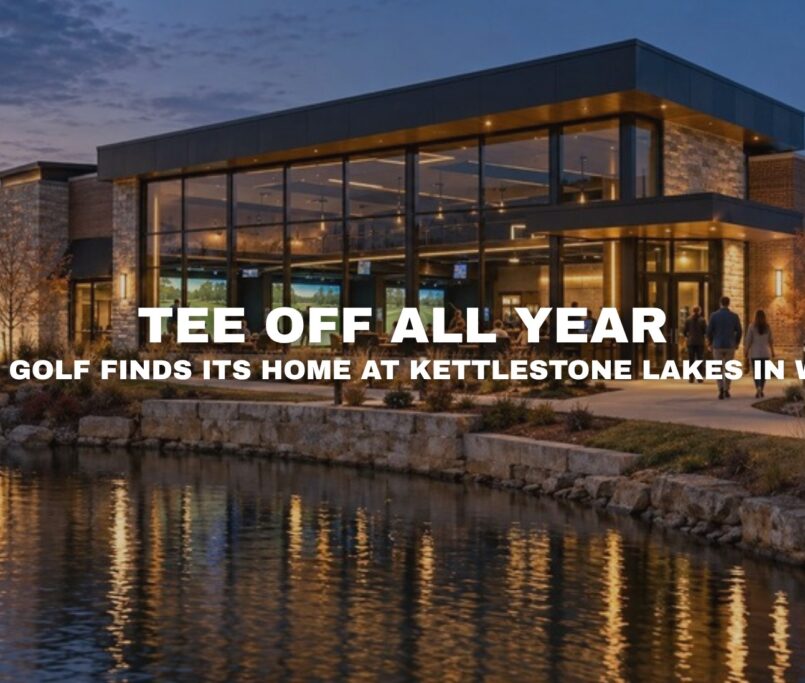
At Kettlestone Lakes, a restaurant or bar with a lakeside patio is not just offering outdoor seating. It is offering a destination. That distinction matters enormously when the dining market is competitive and the difference between a customer choosing your location over the alternative three miles away comes down to the overall experience you promise.
Advantage 3: Social Media Visibility That Money Cannot Easily Buy
In today’s restaurant and retail environment, a location that photographs well is a genuine competitive asset.
Social media platforms now guide dining choices for 74 percent of consumers, making them the leading source of restaurant inspiration, and restaurants that invest in social media strategies see an average 9.9 percent lift in revenue. Restroworks
The challenge for most suburban commercial operators is that their physical environment gives them little to work with visually. A standard interior and a parking lot are not compelling content. Creating shareable moments requires investment in photography, events, and staging.
A lakeside location solves that problem organically.
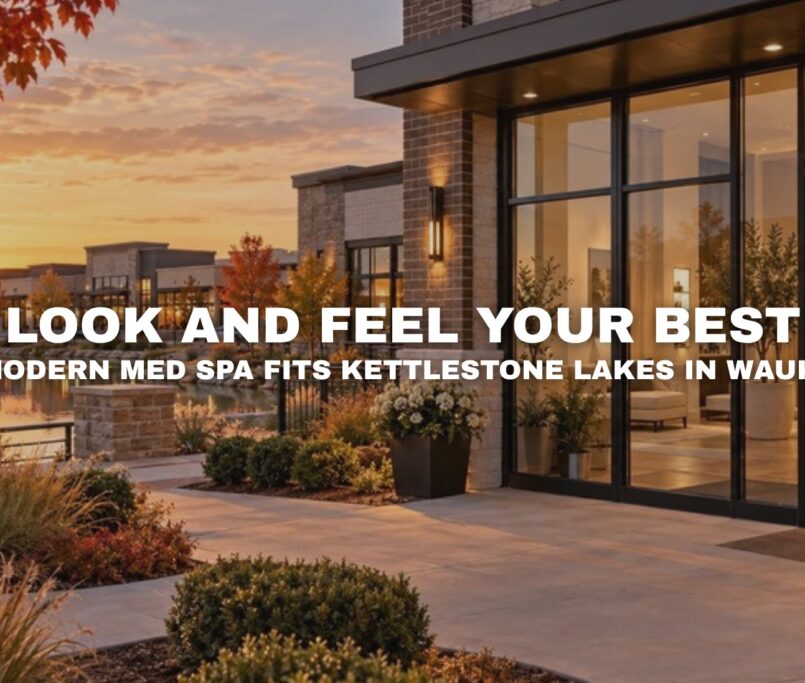
Every golden-hour sunset over the water is a potential post. Every outdoor dining moment with the lake in the background is a shareable image. Every event on the promenade becomes visual content that spreads organically through the feeds of the people who attended. The physical setting generates the kind of imagery that social media audiences engage with, and it does it continuously without additional marketing spend.
For businesses at Kettlestone Lakes, proximity to the water feature is essentially a permanent, renewable marketing asset. It is the kind of visual backdrop that drives discovery, builds brand awareness, and converts new customers who have never set foot in Waukee before but have seen the location in someone’s post.
Advantage 4: Water-Adjacent Office Settings Command a Real Premium
The advantages of waterfront commercial real estate in Iowa are not limited to restaurants and retail. Office users benefit significantly from a water-adjacent setting too, and the commercial real estate market reflects that.
Professionals report higher job satisfaction, better focus, and lower stress levels in offices with natural views compared to interior offices or those facing other buildings. These findings are consistent across industries and geographies. In practical terms, that means:
- Businesses in water-adjacent office environments have an easier time recruiting talent
- Employee retention improves in settings employees genuinely enjoy coming to
- Client-facing businesses, from law firms to financial advisors to healthcare providers, benefit from the perception of quality that a premium setting confers
- Professional services firms can support higher billing rates and service pricing when their environment communicates sophistication and care
Kettlestone Lakes has designated premier office sites within its development plan, and those sites benefit not just from the I-80 visibility and Grand Prairie Parkway access that any Kettlestone parcel offers, but from the lake environment that surrounds the district. For a professional services firm evaluating a move or expansion, the difference between a generic office park and a lakeside mixed-use address is not trivial. It affects recruitment, retention, client perception, and even the morale of the team that shows up every day.
Explore the premier office sites available at Kettlestone Lakes to understand how the development’s water setting applies to professional and office users.
Advantage 5: Water Features Extend a District’s Usable Season
Iowa has four distinct seasons, and suburban commercial developments that do not account for that reality often see dramatic swings in foot traffic and revenue between summer and winter.
The lake feature at Kettlestone Lakes creates programming opportunities that extend the district’s appeal and activity across the calendar in ways that landlocked developments cannot match.
Consider what a managed lake environment makes possible:
- Summer lakeside events, concerts, and outdoor dining activations that draw regional visitors
- Fall evening programming around the water that extends the patio season
- Winter illumination and waterfront lighting installations that create destination appeal during colder months
- Year-round walking paths along the water that give residents a reason to be in the district outside of specific shopping or dining trips
Each of these is a traffic driver for every business in the development. A family that walks the lake path on a Saturday afternoon walks past storefronts, notices new businesses, stops for coffee, or decides to come back for dinner. That incidental exposure is one of the most undervalued commercial advantages of a walkable waterfront environment.
For business operators, it means a more stable revenue curve across the year and a district that remains relevant to the community rather than becoming purely transactional.
Advantage 6: Scarcity Creates Lasting Value
Perhaps the most straightforward argument for waterfront commercial real estate in Iowa is the simplest: there is almost none of it.
Iowa has natural lakes, mostly concentrated in the northwest corner of the state near the Iowa Great Lakes region. In the Des Moines metro, which is where the population growth and commercial activity are concentrated, purpose-built lakeside commercial development essentially does not exist at meaningful scale outside of Kettlestone Lakes.
That scarcity is not a temporary condition. You cannot add a lake to an existing development after the fact. A competitor cannot replicate the Kettlestone setting by acquiring adjacent land or upgrading their facade. The water feature is permanent, and its commercial value grows rather than diminishes as the development fills in and the district becomes more established.
In commercial real estate, lasting competitive advantages are rare. Most location advantages erode over time as markets develop, new supply enters, and traffic patterns shift. A lakeside setting in a master-planned development does not erode. It becomes more valuable as the district around it matures and more businesses and residents come to depend on it as part of their daily environment.
For developers and business operators making location decisions with a ten to twenty year horizon, that durability is a meaningful part of the financial case. Waterfront commercial real estate in Iowa at Kettlestone Lakes is not just a better address today. It is a better address permanently.
According to the Iowa Economic Development Authority, the state’s high-growth suburban corridors are priority markets for commercial investment, and Waukee’s position within that priority tier means the long-term fundamentals supporting Kettlestone’s value are backed by statewide economic strategy, not just local momentum.
For business owners ready to learn what parcels remain available within this rare commercial setting, the Kettlestone Lakes sales team is the right starting point.
Frequently Asked Questions
What makes waterfront commercial real estate in Iowa valuable for businesses? Waterfront commercial settings increase customer dwell time, support higher average spending per visit, generate organic social media content that drives discovery, and create event programming opportunities that extend seasonal revenue. Research consistently shows that natural environments, particularly those with water views, change how customers feel and behave, producing measurable improvements in business performance across restaurant, retail, office, and personal care categories.
Is there waterfront commercial real estate available in the Des Moines Iowa area? Purpose-built lakeside commercial real estate in the Des Moines metro is extremely limited. Kettlestone Lakes in Waukee is a rare example of a master-planned mixed-use development built around up to nine acres of lakes, with commercial parcels offering water views and walkable access to the lake promenade. Available parcel categories include restaurant, retail, office, hotel, and multi-family uses.
How does a lake view affect restaurant revenue? Research into biophilic design and natural environments in hospitality settings consistently shows that customers in lake or water-view settings stay longer and spend more per visit than in comparable venues without those features. Water views also create highly shareable social media content that drives organic discovery, and outdoor patio settings with water views support private event rentals and seasonal programming that generate additional revenue streams beyond standard dining operations.
Why do office tenants benefit from waterfront commercial real estate? Office tenants in water-adjacent settings report higher employee satisfaction, stronger focus, and better retention. For client-facing professional services firms, a premium lakeside setting also supports higher service pricing, stronger client perception, and easier talent recruitment, all of which affect profitability beyond the direct operational benefits of a pleasant work environment.
What is the long-term value of waterfront commercial real estate in Iowa? Water features in commercial developments cannot be replicated by competitors, which means the value they confer does not erode as markets become more competitive. In Iowa’s Des Moines metro, where lakeside commercial development is essentially nonexistent at meaningful scale outside of Kettlestone Lakes, that scarcity means the competitive advantage a water-adjacent location provides is permanent and grows as the surrounding district matures and establishes itself.